 Surroundings
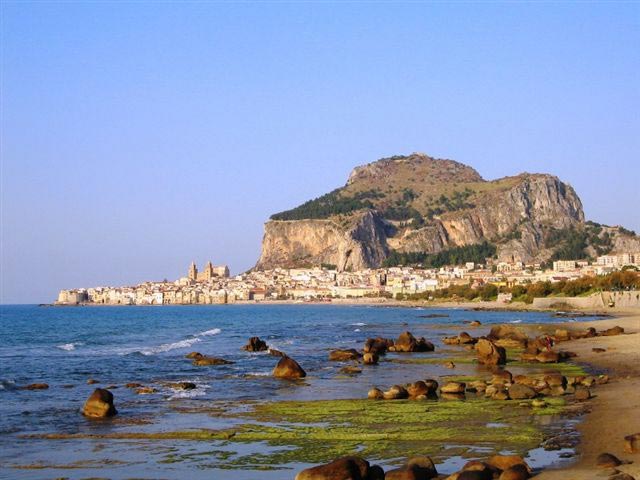
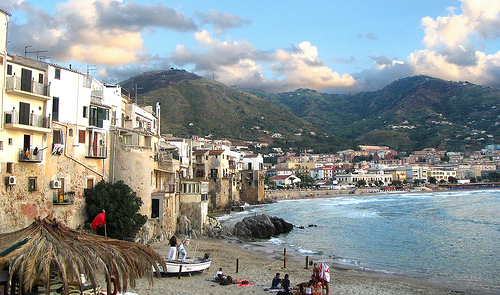
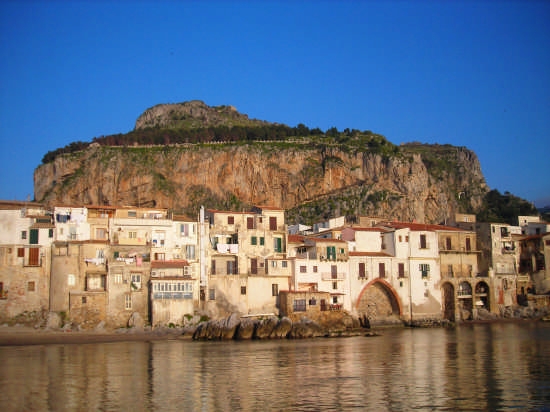
Cefalù:
Of ancient pre-Hellenic origin, Kephaloidion that urban history begins in the fifth century, became Roman in 254 to C. After the Byzantine period and Arab occupation followed the two ruinous sieges of the ninth century.
In 1063, with the conquest by the Norman Roger D'Altavilla, for the city a new era of great artistic fertility and economic perspective begins.
Tourism, now expanding, is an important source of income for the inhabitants (cefaludesi): 13,882 (1996). Today the local economy is based on agriculture, handicrafts, fisheries, food, wood and building materials.
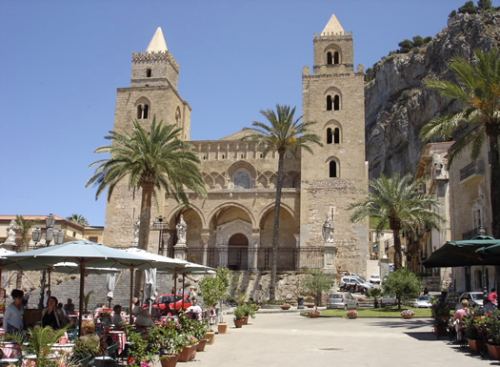
The Cathedral:
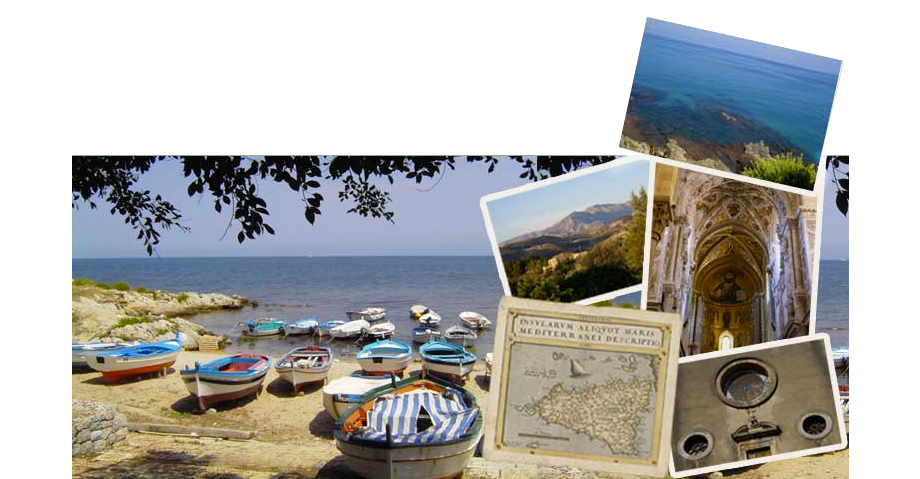
Founded in 1131, the imposing building with three naves of the Cathedral of Cefalu dominates the main square of town. Overlooking an terraced courtyard enclosed by a fence, the front, built in 1240, presents the portico with three arches of the fifteenth century, dominated by two orders of loggias and framed by two imposing towers made precious with single and double windows.


Madonie Park:
Behind us, is ideal for hiking villages in its cultural and its naturalistic walks in the beech forests at high altitudes.
Describe the characteristics of the Madonie area is certainly not enough to understand why, in November of 1989, was established the Madonie Park.
Instead you must visit! The answer is all there: in his unique places, unique in the mountains and articulated by various profiles; in cool, clear spring water, and sometimes exclusive, rare in plants, in woods and clearings, in the fragile wings of butterflies in the treasuries of architecture, in many towns, but also unexpected emerging in the countryside or in the woods; cultural identity of communities, in the noble origins of the peoples that have followed, in the work to the rhythm of the time of the peasants in the toil of the shepherds or in the hands of skilled craftsmen and tireless.
The Ways of Ceramics:
The initiative, promoted and organized by the Provincial Tourism Palermo is the only of its kind in Sicily, and winds over a large territory. It not only functions as a cultural stimulus, but to enhance, protect and ultimately restore the productive activities typical of the area. Accessible in the coming months, the routes will be marked by seventeen explanatory panels in plexiglass and sales literature.
There are traces of activity, even at the beginning of the 900 active and flourishing, which occupied whole families which produced artifacts of great artistic value nowadays, in many cases, been abandoned: quarries, kilns, stazzoni (ie uoghi production) , the artifacts were found, studied and cataloged by type and state of preservation, and then placed in an interesting historical and artistic itinerary that involves seven municipalities of the Madonie.
Castelbuono - Covering tiled spire of "bulb" of the Church of the Crucifix located in Corso Umberto. It is a type typical of the eighteenth century Neapolitan brick tiled scales (many are missing). The furnace of Castelbuono, in the district Cocozzone was active until 1960.
Collesano - In the district of San Francisco, is the factory for the production of ceramics, consisting of kilns, ovens for the preparation of oxides, a mill, lathe, the area for the drying and beating of ' clay. Probably the late 500, the structure is affected by a recovery project by the municipality. Located in Piazza Castello, the Church of Santa Maria with the old spire conical tiled wedge back to 600, in fairly good condition. The tiles produced locally formed diamond monochromatic white, brown, blue, blue and yellow.
Gangi - There are two interesting churches with majolica spiers of the early eighteenth century: the SS. Saviour, in the street and San Cataldo, located in Via G. F. Vitale. The production is probably local and the state of conservation of rhomboid blocks that make up a complex geometric motif, is good.
Geraci Siculo - Still coatings majolica spiers of two churches, St. Stephen, in the street, and Santa Maria Maggiore, square matrix. Made between 600 and 700 to the geometric design, are in good condition.
Petralia Soprana - Have special colors, among which are golden yellow and deep blue, the spiers of the Church of Santa Maria di Loreto in the homonymous square. Produced Collesano, tile wedge back to the middle 800. A valuable starting tile 800 which depicts a monstrance is located in Via Foundry, near Piazza San Michele. A furnace in poor condition, is located in the district of Port Seri.
Polizzi Generosa - We are paving the Audience in St. Mary Church and the Church of the Badia Vecchia (in the homonymous square and on). The first consists of twenty bricks that form a geometric pattern with the center of the lilies. This is a factory of the early '700 colors white, green and yellow, from Collesano. The second floor is a typical example of a trapezoidal alternating black and white, produced in Castelbuono, rebuilt and modified several times. Integra and in excellent condition occurs the furnace Saprone district. San Mauro Castelverde - There is a precious majolica of the Church of San Mauro in Corso Umberto. Hemispherical shape, the spire, the first half of 600, is decorated with tiles laid diagonally to the wedge with monochromatic parallel, a mosaic of white, black, green and yellow gold in fairly good condition. Two ceramic panels with sacred located along the route of the procession of the Cross date back to the 700 (from 1950 were redone by the master potters of Santo Stefano di Camastra).